
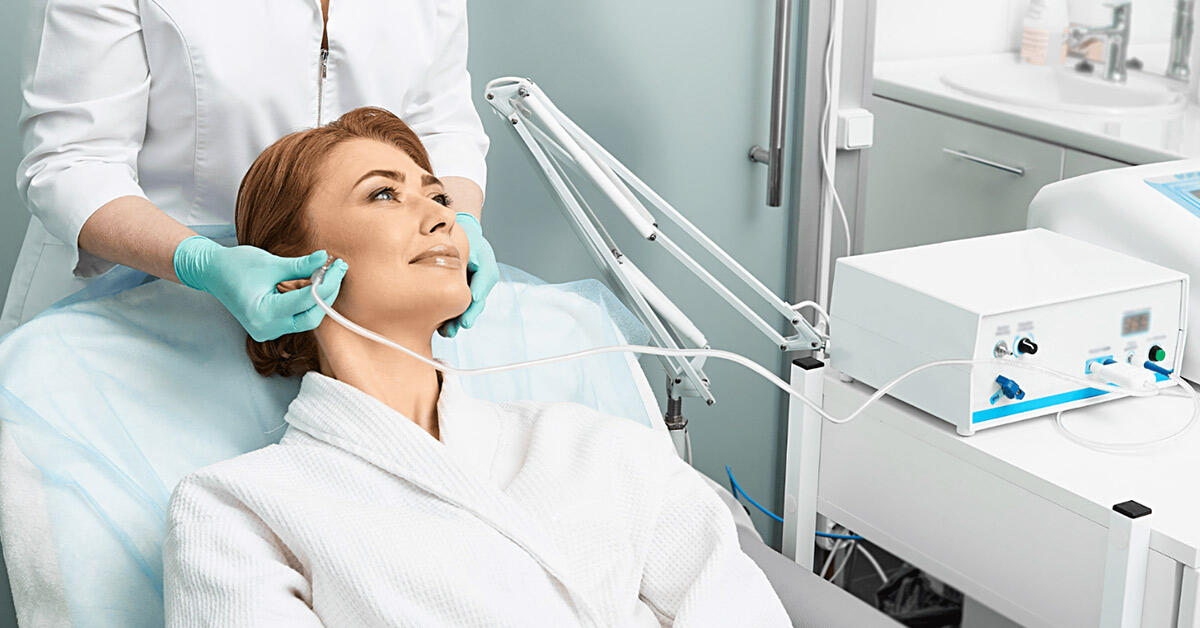
OZONE THERAPY
Ozone is a chemical compound consisting of three oxygen atoms (O3). It is a very high-energy form of normal atmospheric oxygen (O2), which consists of diatomic atoms. Thus, the structures of these two types of molecules differ as follows:
O3 is a colorless gas at room temperature with a characteristic odor (detectable after stormy weather, at high altitudes, or near the seashore). Its name comes from the Greek word “ozein,” meaning “to smell.” It was discovered in 1840 by the German chemist Christian Friedrich Schönbein (1799-1868).
Near ground level, it is found as smog at concentrations of one particle of O3 per 10 million air particles (= 0.1 ppm = 200 µg/m³). At an altitude of 2000 meters, this concentration decreases significantly to levels of 0.03 – 0.04 ppm.
Thanks to its very strong oxidizing and highly effective disinfecting properties, it is used as a germicide in water treatment plants providing drinking water worldwide. In ancient times, ozone, which is in the stratosphere layer of the atmosphere and absorbs harmful rays from space, especially the sun, preventing them from reaching the earth, was called “Breath of God (ozein)” in Greek. (Ozone, which has a sharp odor, is derived from the Latin word “ozein (bad-smelling)). The fresh air we breathe in after storms with lightning and thunder is created by ozone, which is produced during the electrification of clouds.
WHAT IS OZONE THERAPY?
It is a healing treatment that uses ozone gas, an active oxygen molecule.
Ozone therapy, applied in many countries around the world, including the USA, Canada, Europe, Russia, and Japan, is one of the most sought-after complementary medicine treatments in recent years.
In medicine, ozone was first used during World War I to heal wounds. After World War II, the beneficial effects of ozone were proven in all areas, and the use of modern equipment for ozone-based treatments became even more widespread.
Who can administer Ozone Therapy?
It can be administered by doctors who have received training in the relevant field and are certified by the Ministry of Health. The application areas can be units or treatment centers.
Which patient groups cannot receive Ozone Therapy?
Ozone therapy is not applied in cases of glucose-6-phosphate dehydrogenase enzyme deficiency or favism, diseases such as leukemia and hemophilia, those with ozone allergies, those who have recently had a heart attack, pregnant women, those with uncontrolled hyperthyroidism, and those with cardiovascular diseases.
What is Ozone Minor Application?
This method involves taking a small amount of the patient’s own blood, ozonizing it, and then injecting it intramuscularly. This method is preferred to prevent allergies and in skin diseases.
How often should I have Ozone Major Therapy?
– In ozone therapy, a course of at least 10 sessions is recommended to establish a certain cellular memory.
– The 10-session course is spaced weekly.
– Patients who receive one course (10 sessions) of treatment annually and experience the healing effects,
can progress to a maintenance dose of one session per month until a full annual course is completed.